

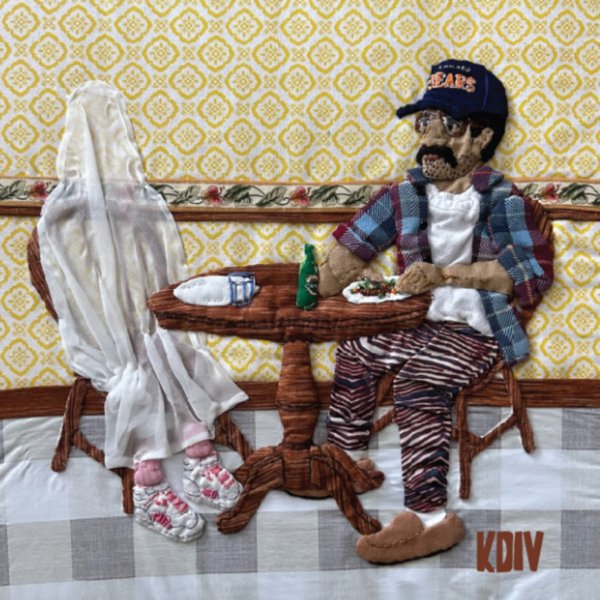
The World of Kenny Dennis

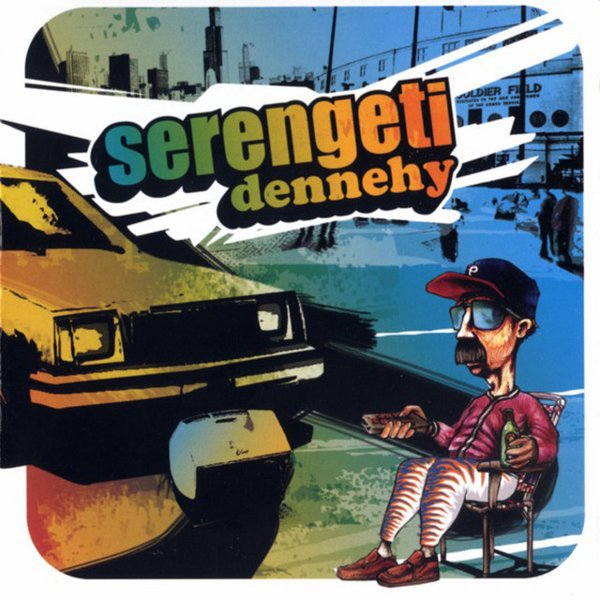
The rap alter ego is nothing new in hip-hop: MF DOOM and Kool Keith careened through a portfolio of them in order to draw out different narratives and perspectives to their rhymes, Shock G conjured up Humpty Hump as a P-Funk-esque raconteur hypeman who was every bit as tight on the mic as his “main” identity, and there were even early harbingers in hip-hop Year Zero 1973 when Last Poets member Jalal Mansur Nuriddin went incognito as Lightnin’ Rod to record the legendary proto-rap classic crime yarn Hustlers Convention. But there’s never been a persona quite like Kenny Dennis. Concocted by Chicago rapper Serengeti (nee David Cohn) and given his first major place of honor as the featured character on the cover and title cut of his 2006 album Dennehy, Kenny is a fascinating study in how a detail-focused rapper with a deep interest in the inner lives of the people he writes about can develop a fictional presence into someone that feels deeply resonant, even real.

This isn’t rare territory for Geti. 2011’s Family&Friends, which is worth checking out first if you haven’t gotten familiar, is a prime example of how he can weave a bunch of regional tics, pop culture references, and personal travails into a vivid portrait that transcends Type Of Guy rigidity to depict people far more complicated than surface details might depict. And his storytelling is often a bit more impressionistic than expositional — listeners might glean less than half of what a character’s really thinking, but they’ll also have a clear picture of where it’s all happening, how it all feels, and what details at the margins wind up lingering after the fact. (If he really wanted to tell a compelling MMA story, Bennie Safdie should’ve adapted “The Whip” instead of John Hyams’ Mark Kerr doc The Smashing Machine.) He’s also got a voice that gravitates towards midtempo mellowness, but is ready to switch things up at just the right time into fast-rap overload or emotional tumult — a versatility that’s necessary when you want to draw out the nuances of a whole cast of characters, like a novelist who has to double as a voice actor.

Still, there’s something about Kenny Dennis that stands out amongst Geti’s characters, and not just because the mustachioed Bears superfan is a popular fan favorite. Kenny is at once a cross-cultural caricature and a real-seeming individual: a working-class white guy character portrayed by a Black rapper a generation younger than him, but also a hometown-signifying fixture in his peripheral vision with his own familiar struggles and sources of empathy. They share a few obsessions and preoccupations — softball, martial arts, blue-collar labor — to ground the character in Geti’s own experience. (He’s often compared going into Kenny Dennis Mode to becoming The Hulk, just something he keeps under the surface.) But Kenny also expands Geti’s own imagination into the shoes of someone with a different, more outgoing social world. Kenny’s portrayals are often comedic in a way that hints at Serengeti’s own self-effacing tendencies; there’s something very Second City self-aware about the heaviness of Kenny’s accent and his fixation on the past glories of Ditka and Jordan as a way of trying to hang on to memories of a specific place in the world as you first really remembered and loved it.

But the further Serengeti went into the theoretical inner reaches of Kenny’s personality, the more it became apparent that there was a deeper story to be told. “Dennehy” wasn’t just someone rapping in character, it was developing a character who could rap — someone with a different voice and flow to him, an exercise in pushing past Geti’s usual parameters into the flow of someone raspier, louder, and more prone to getting stuck in the same handful of self-defining reference points as a way to stave off a succession of personality crises. Kenny’s backstory is both absurd and tragic, a sort of dark comedy a’la Fear of a Black Hat through the Coen Brothers: an aspiring ‘90s rap star who blew it because he couldn’t brush off a slight from NBA star and Fu-Schnickens guest Shaquille O’Neal, he is left to spend the ensuing years constantly wondering what if as he marinates in his squandered potential between paeans to Andre Dawson and Polish sausage. The only things that keep him going are a succession of midlife-crisis reinvention efforts and a Wife Guy energy so powerful that he keeps manifesting his partner Jueles into his life even though she’s been out of it for decades. It’s both as bleaky comedic and uncomfortably sad as it sounds.

What Kenny Dennis isn’t, however, is a loser. He’s a reflection of a certain corner of the multicultural urban world in flux and crisis, an aging head whose struggles to weigh past triumphs against future potential lead him down some unlikely paths. DOOM is a noticeable lyrical influence on Serengeti’s style, but it also recalls the kinds of characters you’d see populating a Jim Jarmusch film or a Carl Hiaasen novel, the kind of people who look like burnout losers or fuckup weirdos from the outside yet have an endless depth of both bravado and sorrow pulling them through the world. 

Nate Patrin

Kenny Dennis EP

Serengeti
Kenny Dennis EP cover

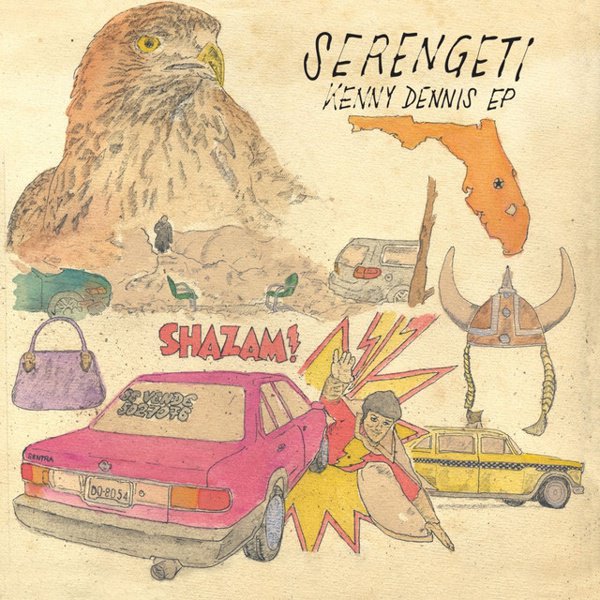
Brief as it is, this seven-track EP is a vital part of Serengeti’s whole Kenny Dennis saga: not only does it flesh out a couple aspects of the eccentric character’s backstory, it sets him up for a dozen-year-long run of cult-fave records that take the titular character through a bewildering yet gripping arc of failure, reinvention, success, crashing out back into failure, delusion, and eventual contentment. Two big highlights are charmingly funny in completely different ways: “Don’t Blame Steve” proves that a White Sox fan like Kenny can find empathy for a fan of the crosstown rival Chicago Cubs if that fan becomes as big a scapegoat as Steve Bartman did, while the other side of his sports-obsessed coin flips over to reveal his still-simmering bitterness over Shaq disrespecting Kenny’s crew Tha Grimm Teachaz back in ‘93 on the throwback “Shazam.” (“You got no handles/You double dribble/You too sweet like a lollipopsicle.”) But they’re just parts of a whole. Both his underdog vibe and his aging-out frustrations are merged from the get-go on opener “Rib Tips,” which starts out with him trying to relitigate old in-group squabbles and veers into an awkward defense of his kid brother’s gig as an exotic dancer (“Tanya had to make a living!”). And the namesake title cut reveals further complications: a guy who’ll smack the shit out of someone for playing his music too loud on the L train one verse, then help a stranded motorist with his busted radiator hose on another. In terms of pure style, Geti’s partnership with producers Jel and Odd Nosdam brings out the corroded and blunt-force qualities of KD’s voice by underpinning it with a subtly queasy and disorienting warping of classic ‘90s headknock beats, though the unexpected motorik echolalia of fast-rap closer “Flat Pop” makes for a startling detour-slash-exclamation point.

AJAI

Serengeti, Kenny Segal
AJAI cover

Serengeti’s dedication to keeping his Kenny Dennis character evolving has been complemented by his broader-scoped observations of character, as though the incidental figures in Kenny’s life could (and, per Kenny’s wife Jueles, did) carry concept records of their own. And the addition of Ajai into the ensemble in 2020 made for a fascinating twist in the saga: a guy who, in the deepest trenches of hypebeast mania (“I hope this blue L’Effet matches my croquet/New Balance and Moncler collab with Dead Day”), briefly crosses paths with Kenny thanks to a misdelivered pair of Nike Air Force 1s and sees him off into a world of drop-obsessed derangement. Geti splits time between a front half led the smoother-voiced yet quietly, monomaniacally focused Ajai, whose tag-popping delirium scatters luxury name brands and half-remembered one-season trends with the feverish overload of circa-2000 Ghostface, and the familiar raspy Kenny Dennis holler that populates the album’s second half with his struggle to find a new phase in life (“I went away, shaved the stache, bought a Buick Reatta, cash/Got a job, a breakfast truck, 94 overpass”) en route to transforming into the ultimate hip-hop late-midlife crisis sufferer. It’s a bit unseemly — someone who had dreams of being a rap great pivoting to pseudo-Abloh Balenciaga-tastemaker striving — but it’s actually oddly touching hearing him finding a new phase and a potential new girlfriend (“Elaine”) as he tries to flip his personal memorabilia into easy cash for ‘90s-vintage fiends (“Jueles Trunk”). Pair that up with the contributions of another Kenny entirely — L.A. vet producer Kenny Segal, fresh off his 2019 level-up billy woods collab Hiding Places and delivering grimy zero-bullshit underground heat — and it sounds like an album of a tired old man getting pulled back from the brink of isolation and into the heart of something far weirder. Its spring ‘20 release date might’ve temporarily doomed it to relative afterthought status when the world’s attention turned to COVID-19 at the time, but in hindsight Ajai‘s the album that put the most fascinating twist on Kenny’s story and sustained Serengeti’s ability to further flesh out an already enjoyably tangled creation.

Kenny Dennis IV

Serengeti
Kenny Dennis IV cover

In some ways, 2024’s KDIV feels like an attempt at closure for one of the longest-running alter egos in music. After nearly two decades of characterization and storytelling that veered equally into regional-humor goofiness and genuine pathos, the fourth-but-really-more-like-a-dozenth album in the Kenny Dennis saga concludes on a tragicomic solo piano ballad, “Juelie and Me,” that plays like the final eulogy for a woman he can’t forget but knows he has to move on from. Kenny is still Kenny as Serengeti made him throughout KDIV; one significant moment on the album comes during “The Most,” where he takes stock of everything he’s gone through by kicking things off with some “Super Bowl Shuffle” lore as a way of acknowledging “sometimes rap hurts and breaks up friends.” But the vivid Chicago Guy caricature of old has matured into something more complicated, both as a reflection of his fictional development and of Serengeti’s approach to his storytelling, not to mention the nuances of his voice and his flow. Kenny’s rasp sounds memorable when he’s in agitated grand-plan mode a’la “Business,” but at its best when he’s as measured as he is on the contemplative “Smooth Jazz” or driving the memory lane of street-ball and American Gladiator recollections on “Dino.” It’s not the giddy rush of Kenny Dennis LP or the lowest-moment reckoning of Dennis 6e, but a reconciliation of those two moods, complete with lyrical callbacks on “Heat Not Hot” to previous joints from “Dennehy” onwards pulling it all together in what becomes a consolidated recitation of his most positive motivations and a fully realized sense of self. There’s a feeling of potential culmination here, too. The return of Anders Holm in his Kenny Dennis III role as narrative presence (backed by compositions by Sufjan Stevens), the beats from past partners like Andrew Broder and Kenny Segal alongside new dusty-jazz-beat-flipping teamups with lifer Open I and up-and-comer Thrifty, and the tied-together story threads all give KDIV a further sense of wrapped-up finality. And if that’s really the case, then it’s a perfect ending: a depiction of a man who might not have found total satisfaction but is at least at peace with his past. It’s a place he’s still happy to visit, but with the sense, finally, that he’s still got a worthwhile present to return to.

AJAI II

Serengeti
AJAI II cover

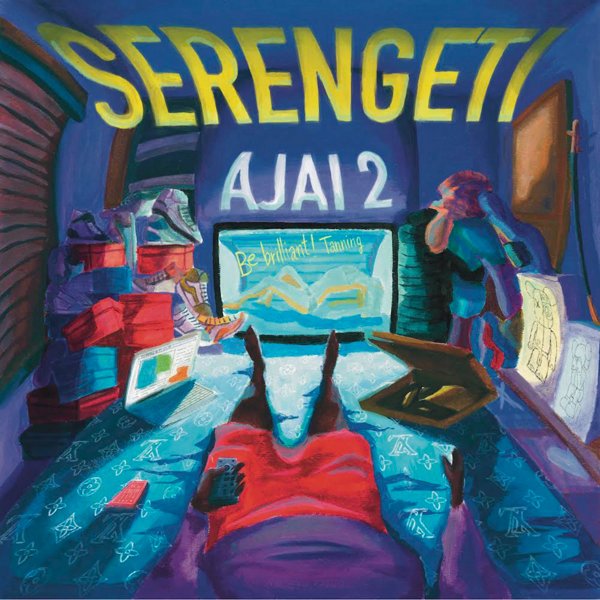
You know you’re in for a weird entry into the Kenny Dennis saga when an album opens on the jingle for a tanning salon en route to its titular fashion fiend falling into a stream of consciousness millennial hypebeast brainrot. Shorter and more contemplative than its 2020 predecessor, with Kenny Segal’s throwbackpack griminiess swapped out for Child Actor’s lo-fi hauntological haziness, it’s a bit more of a postscript than an all-out sequel. It’s also focused almost entirely on Ajai, with Kenny’s own presence limited to cameo duty (namely an “urban market” variant on the aforementioned tanning salon commercial). That’s no dealbreaker by a longshot — the directionless, embattled ultraconsumer-turned-goods-hustler looking at the end of the line is one of Serengeti’s richest narrative threads. In this role, Serengeti raps like an internal monologue that’s gotten away from him, taking obsessive-compulsive inventory in an attempt to bring some order to a domestic life in the midst of falling apart (“Wake Up Ajai”), until he tries to find a new perspective by channelling Kenny Dennis’s own infatuations on “Kenny Gave Ajai His Rhyme Book” — one persona rhyming as another. That’s a key to the album, the reversals of fortune that the album’s protagonist and his barely-heard acquaintance undergo after first encountering each other, and when closer “Get ‘Em” hits and reveals just how much Ajai’s materialism made him an easy target for conflict, it becomes a lot easier to remember that Serengeti’s got more than just one deeply realized character to examine the foibles of aspirational hip-hop culture through — he’s got a whole world.

There's a Situation on the Homefront

Tha Grimm Teachaz
There's a Situation on the Homefront cover

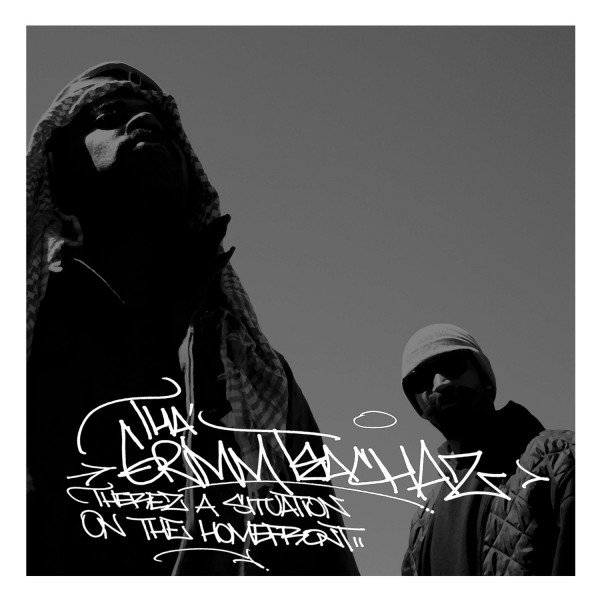
Serengeti’s depiction of Kenny Dennis was already vivid enough early on — an archetype that became a character, then a character that became a persona, and finally a persona that became an attraction in his own right. The real twist of inspiration early on was for Geti to acknowledge that the reason this hoarse-voiced, mustachioed, 50-something white “Super Bowl Shuffle” aficionado expressed himself through hip-hop was that he could actually spit back in the day. Alongside fellow MC Prince Midnight Dark Force (played by Chicago-born Hi-Fidel) and DJ Koufie (providing classic DITC headknock beats and played by… himself?), There’s a Situation on the Homefront reveals “KDz” as a member of a hardcore hip-hop crew, stylistically somewhere between Black Moon boom-bap and Gravediggaz horrorcore, that blew a record deal with Jive when Kenny tangled with Shaquille O’Neal backstage at a label showcase in ‘93. Along with the note-perfect detail of their becoming yet another Industry Rule #4,080 hip-hop major-label casualty, Tha Grimm Teachaz is a fond if lightly irreverent snapshot of hip-hop’s underground on the brink of its early ‘90s Wu-era boiling point, with the added knowledge of what Kenny rapped like before life kicked him in the ass. Geti retrofits his Kenny Dennis voice with (slightly) less of the rasp that arrived after a couple decades’ worth of Kools, leaning into his bellowing breathlessness and deftly mixing up period-detail punchlines with era-appropriate rappin’-ass-rapper kineticism (from “Whatchyougonnado?”: “Metaphorically, metaphysically/Destroying MCs critically, Sentimentally/Don’t worry be happy like Bobby McFerrin/Boutros Boutros, no repairin’”). And PMDF complements his energy with a sharper-toned authority that makes Tha Grimm Teachaz embody the push-pull of being equally conversant in 5 Percenter doctrine and action-movie threats. The funny thing is that even when it ladles on the ‘90s references and hint at further ridiculous twists in Kenny Dennis lore (before Jueles, there was “Melissa”), There’s a Situation on the Homefront doesn’t sound like a frivolous novelty or a parody of a certain strain of semi-subterranean hardcore hip-hop — it’s a love letter to formative influences, a what-if scenario from artists who were too young to join that world but old enough to experience its revelations at a critical time.

Kenny Dennis III

Serengeti
Kenny Dennis III cover

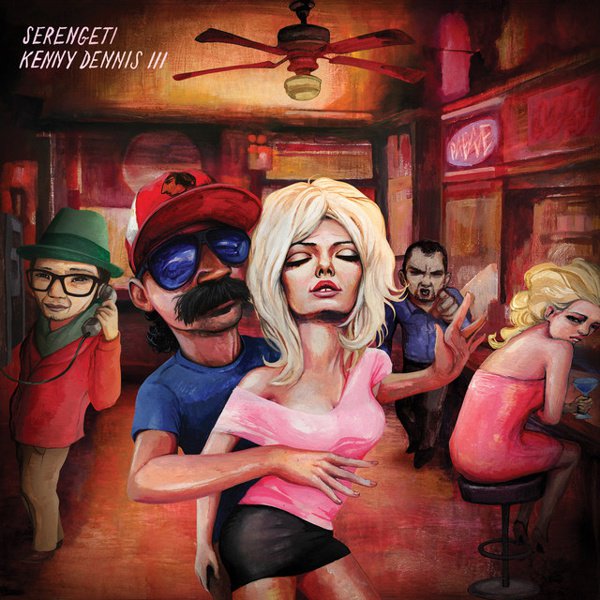
The actually-far-beyond-third album to explore the surprise depths of indie rap’s favorite O’Doul’s aficionado, Serengeti’s Kenny Dennis III takes the essence of his bushy-stached sorta-tulpa into another headspace. Where previous albums might’ve depicted him as somewhere between artistically frustrated and domestically content about his washed peaked-in-the-‘90s status, Kenny’s lingering regrets about the failure of his rap dreams are reignited by a homecoming appearance from his friend Ders (played in skits by comedian Anders Holm), who Kenny attempts to rope into a retro-hip-house project called “Perfecto.” From there on out, comeback-seeking Kenny starts ego tripping on tour, his defensiveness and his deluded tough-guy martial arts posturing start to betray his frustrations — a scatterbrained narcissism (“Dz Goes On”) and financial desperation (“Lose Big”) compounded by a sense of betrayal from both family (“Tanya T,” in which Kenny’s troubled younger brother turns police snitch) and friends (Ders abandons Perfecto after he gets a shot at a plum role in a Diff’rent Strokes prequel series in “Mr. Drummond”). If that makes Kenny sound more like a sad sack than a lovable goof, that’s by design; it’s like Serengeti’s affection for embodying the character has been complicated by the knowledge that Kenny doesn’t seem like the kind of guy who has a total handle on himself. Thankfully the psych-inflected Odd Nosdam beats make the tense atmosphere pull you in rather than push you away, building a ruminative griminess that crests into majesty as the concluding cut “Tickled Pink” gives Kenny’s reflective self-assessment a beautiful (if ultimately temporary) finality.

Dennis 6E

Serengeti
Dennis 6E cover

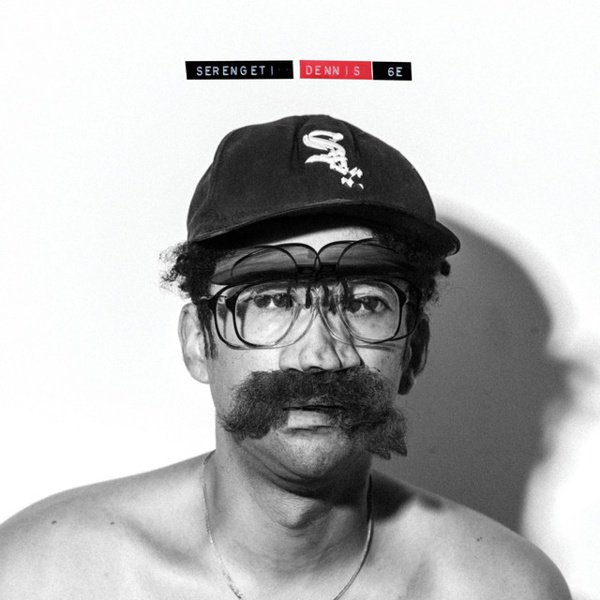
“Tom Selleck was supposed to be Indiana Jones/I’m not supposed to be living here all alone.” This is where things really start getting bleak for poor old Kenny Dennis — bleak enough that Serengeti briefly positioned it as the end of Kenny’s story. After a string of albums that expanded his character from lovable Chicagoland oaf to disillusioned aging rapper, Dennis 6e finds Serengeti’s blue-collar oldhead persona truly on his own, cooped up in his titular apartment and fixating on both where he went wrong and why he never deserved to be wronged in the first place. He still brags about his rap-battle bonafides on opener “Winter Clothes” (“You sweeter than some caramel, I’m stronger than some Duracell”) but quickly detours into a regret-fueled rumination about how his life would’ve turned out if he’d let a few more things slide — like if his pride and his anger weren’t there to set him off when Shaq made fun of Kenny’s facial hair, a subconscious trigger of damaged manhood that culminates in him “stomping around Orlando, mad I never got to be a dad.” 6e also drives home that his wife Jueles is gone forever — apparently the victim of a 1993 plane crash Kenny never fully came to terms with, which is why he spent a quarter century dwelling on a past he’d never been in a hurry to move beyond. He tries to get by on the casual camaraderie of his food truck gig (“Job Story,” where he envies a co-worker’s family life), rec league sports (“Softball,” where an opposing team’s hitter needles him by claiming to love his failed dance project Perfecto), and residual hip-hop motivation (“Don’t Need It,” where he winds up getting exhausted by how much of it was expressed through kneejerk beefing). Andrew Broder’s bleary electronics and ambient minimalism add weary gravitas to the impression of a man struggling with stoner burnout and frozen bitterness, as well as some credible local color to Kenny’s relocation to Minnesota; it’s actually kind of unsettling hearing him rage against past enemies and scuffles with them on the room-pacing unaccompanied pianos of “Jam Time.” And by the time his furious panic-attack fast-rap outburst “6e” dissolves into the exhausted closing summarization of “Different,” the idea of Kenny Dennis as pure comedy rap character is as gone as Jueles is.

Butterflies

Jueles
Butterflies cover

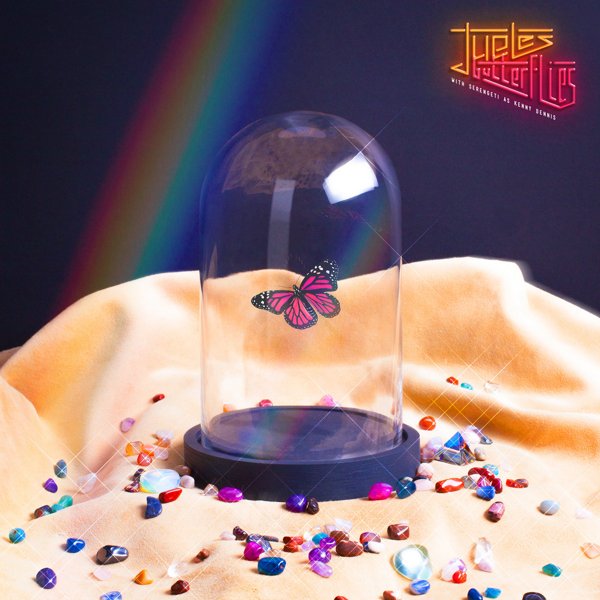
For more than a decade, Serengeti’s depictions and stories of his Kenny Dennis persona relied heavily on his relationship with his wife Jueles. Throughout their saga, we hear of a woman often discussed but never heard from, a source of love and frustration and obsession and, eventually, intense separation-anxiety longing. But with Butterflies, it turns out that Kenny isn’t the only partner in the couple who struggles with the ghosts of thwarted musical stardom. As depicted by singer Jade, Jueles’ own unearthed demo tape of electro jams and synth ballads is deceptively upbeat, at least musically; her singing voice has a smooth lilt that conceals the kind of barbs that producer Rob Kleiner gives punchy syndrum power. It might be an odd fit for the presumed indie rap audience that made Kenny’s name, but as a piece of a bigger story it makes sense; Kenny’s previously inexplicable attempts to reinvent himself as an early ‘90s hip-house throwback in his doomed side project Perfecto take on a different meaning when Jueles’ own in-universe album is the kind of HW Bush-era dance-pop/downtempo homage that conjures up memories of both Julee Cruise and Stacey Q. Unlike the Perfecto EP Serengeti released in 2015 as a bit of a good-natured goof, Butterflies doesn’t sound particularly parodic, even though there’s a remnant archness in some of the lyrical details; her Tom Selleck infatuation (“Tommy PI”), her frustration at Kenny’s underachieving personal rut (“Odouls”), and stray appearances by KDz himself (like a guest verse on happier-times husband-wife teamup “Places Places”) are still very much in the spirit of the story. Interludes and interjections complete the picture of a man who’s resigned to a life spent falling asleep to Perfect Strangers reruns as his wife laments his dead ambitions, culminating in a late run of tracks where Kenny’s breaking point in the relationship is blown up into a droning semi-industrial/kosmische meltdown before a closer by Jueles’ more successful pop-star sister pays her a loving tribute on “Wild Flower” — one that hints that she’s not just out of Kenny’s life, but gone for good.

Kenny Dennis LP

Serengeti
Kenny Dennis LP cover

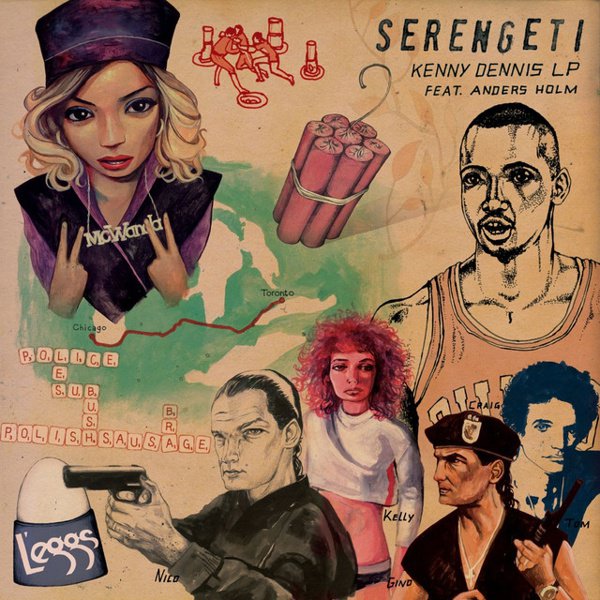
Serengeti’s best feature as a lyricist is his ability to inhabit the lives of others — and not just third hand. A gruff, heavily Midwest-accented character who started out seeming like a regional jokey riff on a certain kind of middle-aged blue-collar Chicagoan, Kenny Dennis broke through thanks to a series of albums that producer Odd Nosdam helped lend an air of small-scale but fascinatingly rendered drama. Sure, Kenny is obsessed with aging-Gen X cable-TV movie and sports touchstones, and it feels like every other verse is riddled with references only Second City locals fully grasp. But it’s Kenny’s personal grudges and heartbreaks that make him a richly realized figure, less funny-voice gimmick and more real-enough regional hero.

Conversations With Kenny/Legacy of Lee

Serengeti
Conversations With Kenny/Legacy of Lee cover

Kenny Dennis might be the most off-kilter alter ago that any rapper of note has turned into a main attraction, but one thing he needed early on was an adversary. Three years after Dennehy introduced Kenny and three years before Kenny Dennis EP began to make him a more prominent element of his discography, Serengeti fully realized the idea of Kenny in rap battle mode; this is where Kenny graduated from rap character to character-as-rapper. Geti plays not only KD but his pitched-down, droopy-flowing adversary Lee, a sanitation worker turned aspiring rapper/laundromat entrepreneur — his jingle for his envisioned “Bubbles and Fun” goofily interpolates “If I Ruled the World” — who gets besieged by the failures of his vision in ways both absurdly comic and recognizably tragic. This sets off Tony Trimm, the album’s (real-world) producer and Lee’s (in-universe) mentor; in the skirmish that pierces the album’s midpoint Trimm belittles Kenny for being stuck in a middle-aged blue-collar rut while Kenny retorts with embittered challenges to Tony’s masculinity. It’s a two-way tie for last, and even if they wind up burying the hatchet once Trimm finds love after a trip to Berlin (“Trimm’s Alright,” featuring the most deranged VU “Femme Fatale” reference in recorded history), Kenny doesn’t fully resolve his own troubles until he suffers a downward spiral (“Rock Bottom”) that precipitates an album-closing trip to a recovery program (“Back on Your Feet”). Meanwhile Lee temporarily finds something resembling happiness with a ferret-owning boho/goth/hippie girlfriend with the deeply unlikely name “Pottery,” but it can’t last either because he realizes it’s a bad fit (“all my cousins are like ‘Burning Man? What the hell is that?’”). There’s something very Great Recession about this album — people hustling to find work, struggling to find a way out, and lashing out at whatever’s closest, including themselves. But there’s a sense of empathy beneath it all; these characters may be schlimazels, but they’re not buffoons.

Dennehy

Serengeti
Dennehy cover

“Favorite actor Dennehy, favorite drink O’Doul’s/Bears, Hawks, Sox, Bulls” — how’s that for an origin story? The title cut to this album not only reveals Serengeti’s gift for elaborating on a type-of-guy taxonomical character observation, it launches an alter ego in Kenny Dennis, Ultimate Chicago Guy, that Geti developed into one of hip-hop’s most fascinatingly weird characters. We see further insights into Kenny’s eventually-outlandish backstory that successive albums flesh out; his paeans to classic rock and cool cars in “New Dodge” (rhymes with “still got my Fiero in the garage”) also hint at a husband-wife relationship that’s not as indelible as he fronts (the defensively protective “Don’t Talk to Jules” — the “Jueles” spelling would come later). But he’s not the only character here, only the most enduring fictional one. Other weirdos linger on the margins — like obnoxious, condescending wannabe-player Derek, who acts like distributing meth makes him as glamorous as Pusha T — but it’s the things that seem to linger in Geti’s own memory that draw the rawest attention. When he turns inward he ties in his fondness for ‘80s VHS genre flicks into a sense of on-the-brink personal excess he hopes eventual success will level out (“Critters”). And when he surveys the landscape he finds a surplus of existential crises, from maniacal overconsumption (“Feeding”) to a self-consciousness about dealing with one’s feelings during adverse times (the “emo” boogeyman prodding of “iPod” and “I Don’t Know”) to a hip-hop culture so materially compromised that a Tribe Called Quest biopic starring Clay Aiken as Q-Tip seems imminent (“The Neeg”). The beats-by-committee are enjoyable if stylistically scattershot, not always the highlight but often the best frame for the picture — especially when the Kenny tracks feel like a necessary series of interjections from someone who might not have it made, but at least knows his infatuations can give him some structure.